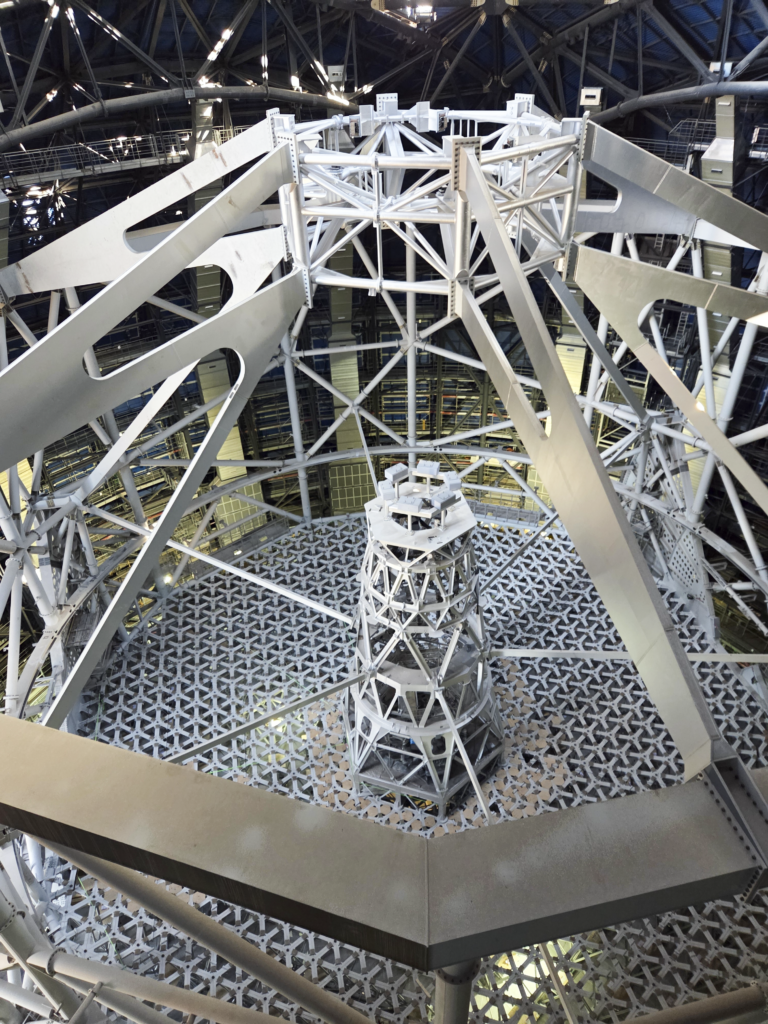
The Extremely Large Telescope has successfully completed the rotation test around its vertical axis. This is a key milestone in the telescope’s construction, confirming the correct operation of the structure and of the motion systems designed to control a mass of exceptional scale with extreme precision.
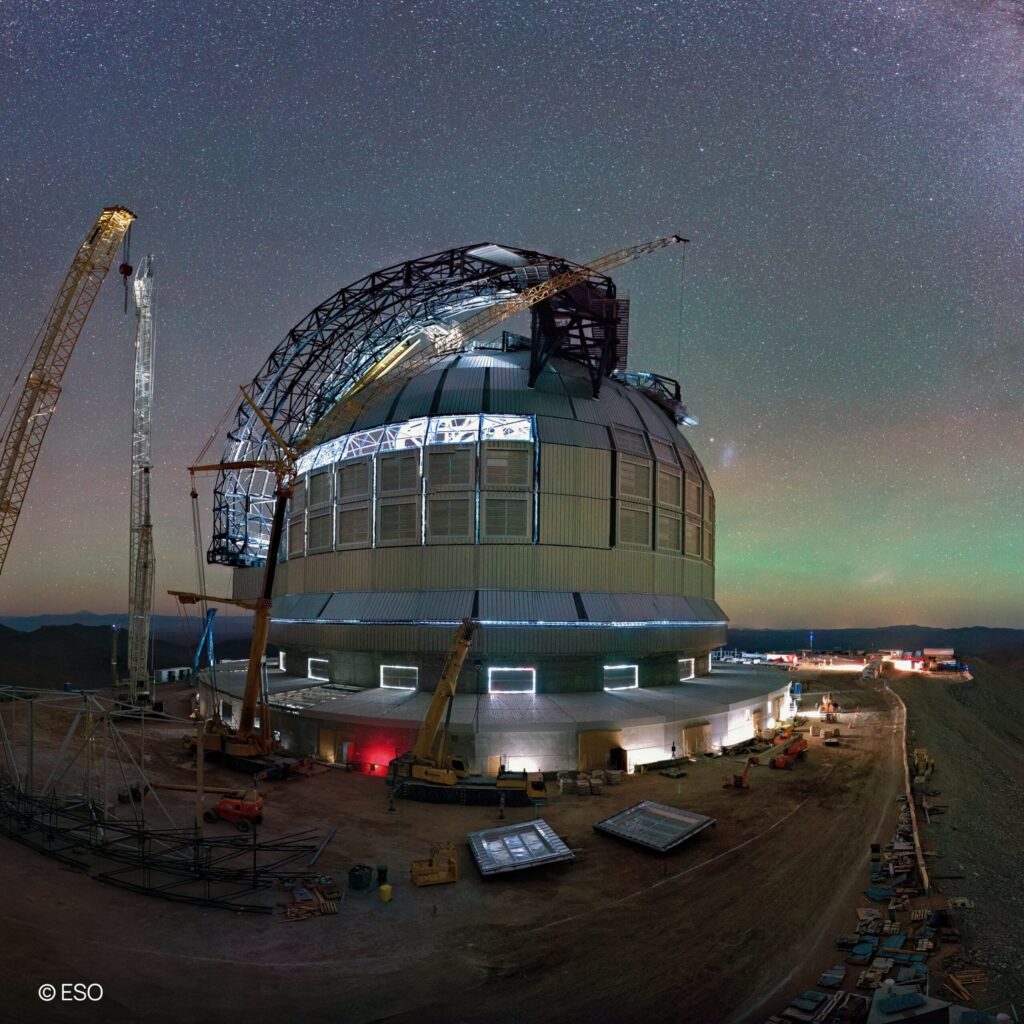
The test took place at Cerro Armazones, in Chile’s Atacama Desert, at an altitude of around 3,000 metres above sea level, where the ELT is currently under construction.
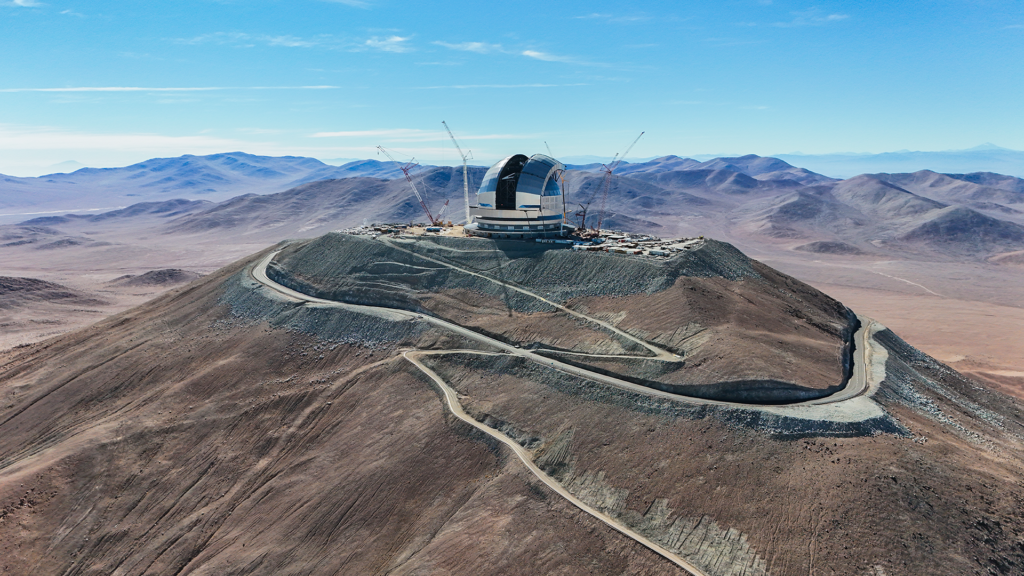
The azimuth rotation test
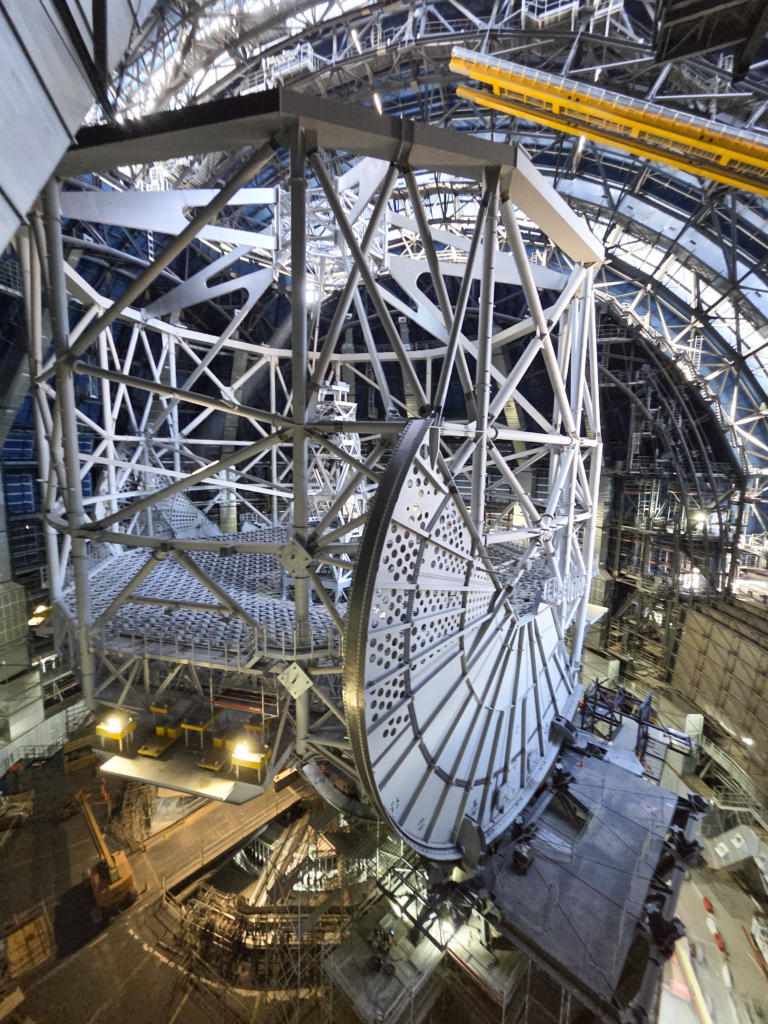
The structure currently being moved weighs approximately 3,500 tonnes, a figure that will increase to 4,600 tonnes once the mirrors and scientific instruments have been installed.
The movement was carried out in two stages: first, the structure was rotated manually by a few centimetres; then, a full rotation was completed using auxiliary motors.
The structure rests on a layer of oil just 80 microns thick, enabling smooth and controlled movement. The ELT’s rotating mass will move with micrometric precision thanks to a hydrostatic system, special linear motors and ultra-high-resolution encoders.
The test confirmed that the structure moves exactly as intended by the design, reflecting both the engineering complexity of the project and the extremely high level of precision required to control the movement of a structure of this scale.
Cimolai’s contribution
The design, production, transport to site, assembly and testing of the ELT have been entrusted to the ACe Consortium, led by Cimolai SpA.
The ELT consists of a steel structure with a diameter of 71 metres and a height of 62 metres. The telescope will be housed inside the dome, a rotating steel structure weighing approximately 6,000 tonnes, equipped with sliding openings, with a diameter of 92 metres and a height of 80 metres.
Overall, the project includes around 13,500 tonnes of steel structures, as well as civil works, mechanisms, systems and finishes.
The entire structure will rest on an innovative seismic isolation system, designed to ensure high stiffness and stability during observations and, in the event of an earthquake, to provide the damping required to protect the extremely delicate mirrors and scientific instruments.
A new way of observing the Universe
Set to become the largest optical and infrared telescope in the world, the Extremely Large Telescope will feature a 39-metre primary mirror and will be operated by ESO’s Paranal Observatory, located approximately 20 km away.
Once completed, it will make it possible to study exoplanets, distant galaxies and cosmic phenomena with a level of precision never before achieved by a ground-based telescope, opening up new perspectives in the observation of the Universe.
“Seeing the ELT move today with the precision we had imagined on paper is immensely satisfying. It proves that expertise, industrial courage and the ability to innovate can place an Italian company at the heart of one of the world’s most ambitious scientific projects. We are proud to contribute to a project that will change the way we observe the Universe.”
Luigi Cimolai